

About libraries...
All those wonderful collections.

Listen or download an audio version of this post:
The warm days of summer mean time off work, travel and relaxation. Summer offers opportunities for those of us who still like reading to explore books and magazine articles, to let the breezes of idle distraction take hold of our imagination and take us where they will. Books will do that, and we love them for it.
Today I’d like to share a post from earlier this year which I enjoyed writing.
Libraries, facing challenges since antiquity, prove their worth
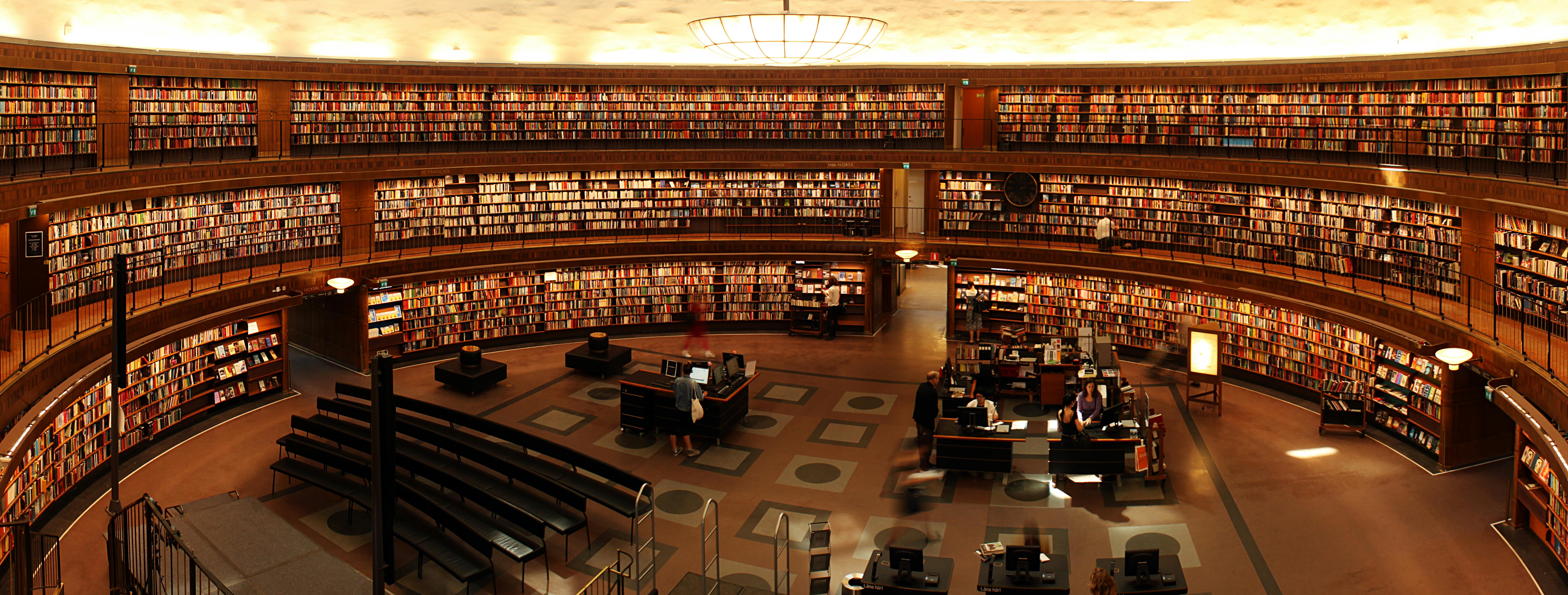
On March 11th in the rural community of Erin, about 80 kilometers northwest of Toronto, local officials gathered to celebrate the restoration of a historic grist mill after a two-and-a-half-year effort. The day was cold, with temperatures not much above freezing; low clouds sprinkled the area with light rain. The refurbishment had been completed in February, but the ceremony had been delayed due to the harshness of the weather then.
The three-storey stone building, erected in 1849 adjacent to the Credit River, operated as a mill until the 1960s when a local cooperative took it over. Later it was used to store lumber. Now, however, it begins a new chapter as the site of a public library: the Erin Village Branch of the Wellington County library system.
At the ribbon-cutting, the county’s chief librarian, Rebecca Hine, referenced one of the most intellectually gifted people of the 20th century: Albert Einstein. In 1921, Einstein had expressed the idea that memorizing facts mattered less than knowing where to find them. Over time, an apocryphal phrase was attributed to the scientist. Hine quoted it at the ceremony:
“The only thing you absolutely have to know is the location of the library.”
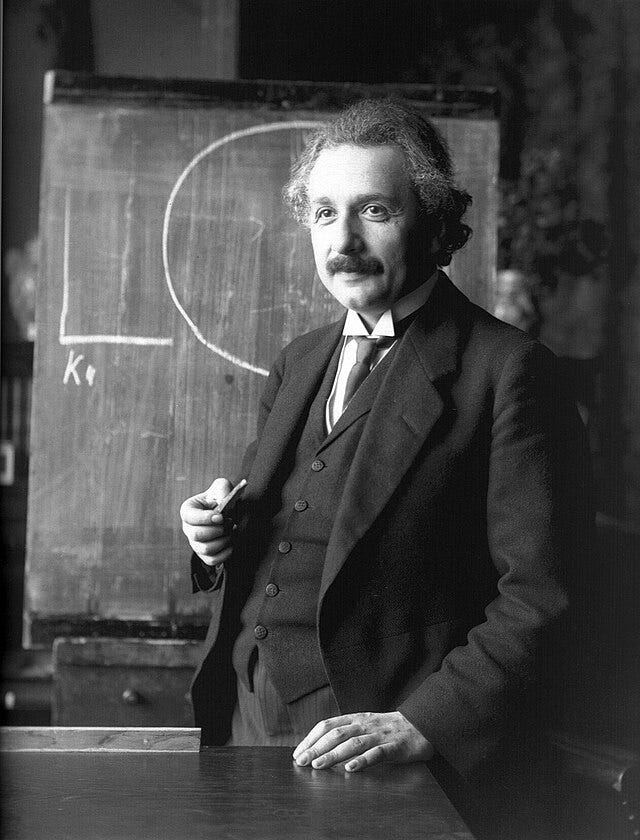
Of all the famous thoughts expressed by Einstein, this one is one of my favourites. It always makes me smile. It’s not just about reducing memorization to make space for imagination. It’s about the value of libraries.
The comment is a recognition of the important work performed by custodians of books and documents. I like to think it’s also a tip of the hat to the places in our communities that cater to the seekers of knowledge, to those who want to open the doors of possibility. Libraries are places for learners and for explorers, for those who, through books, wish to have a conversation with people from the past; for those who dream and create, and for those who simply appreciate the sense of wonder, escape and discovery that is hidden inside each and every book.
Walking into a library is different than asking an artificial intelligence agent on a digital device to provide us information about a query.
Anyone who enters a such a facility steps into a repository; for some, into a hall of treasures. The hushed tones in libraries also create a sense of stillness and tranquillity in contrast with the busy sounds of the outside world.
Ephesus
Four years ago, on a tour, I was awestruck by the remains of a great building. It was the library at Ephesus, in Anatolia, Turkey.
Here’s a photo from that day:
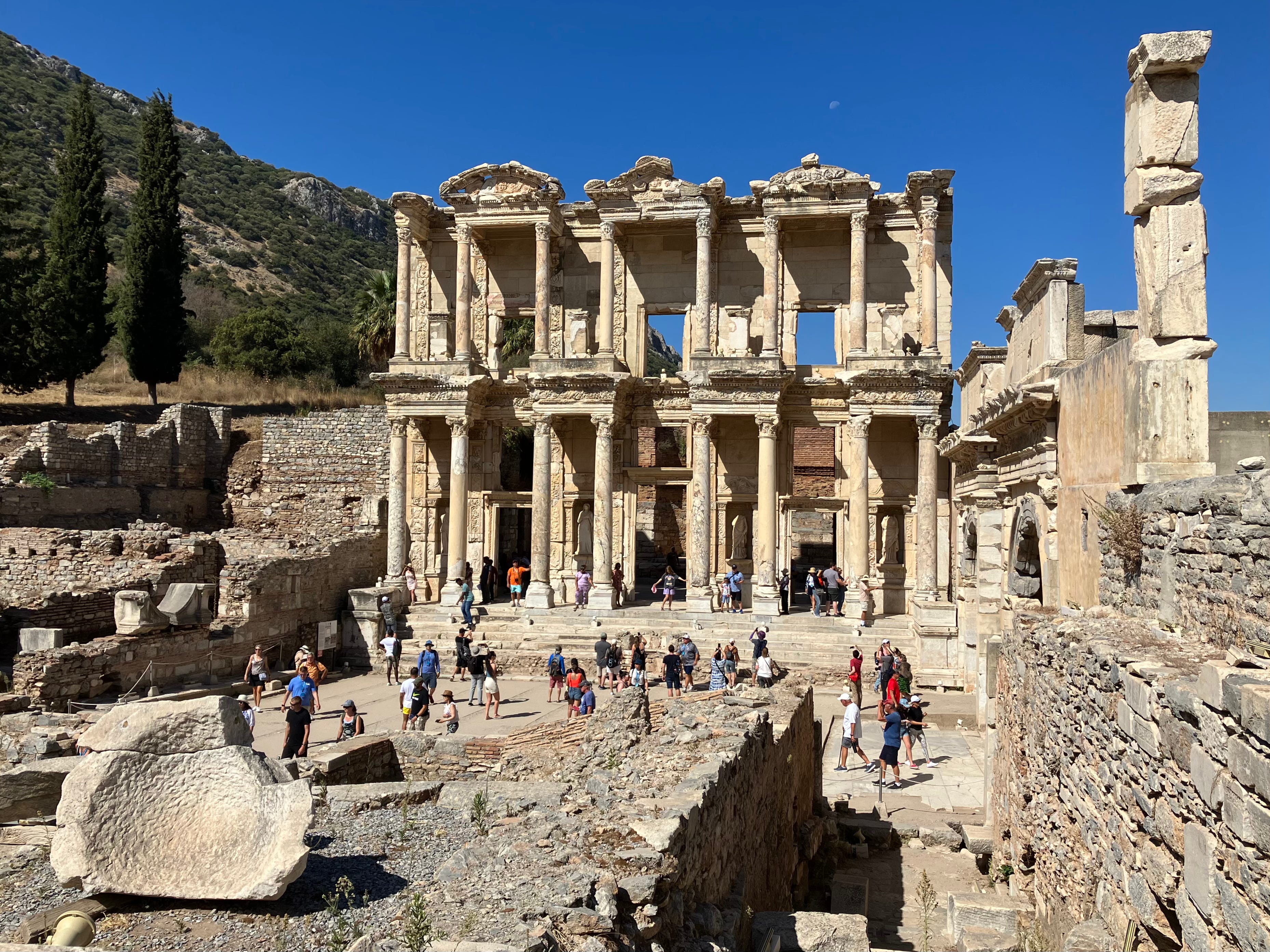
The Library of Celsus, as it’s officially known, was one of the most impressive buildings in the Roman Empire. Built in the second century, it was named after the city’s former governor, Tiberius Julius Celsus Polemaeanus. The building, erected during the reign of the Emperor Hadrian (117-138 CE), was commissioned by Celsus’ son to commemorate his father after his death. Celsus’ crypt was incorporated under the flooring.
Today only the façade, the floor and some walls of the library remain, but in its time it ranked with similar buildings in Alexandria and Pergamum as one of the most important of the great libraries of the Greco-Roman world.
The ornate building, with an impressive colonnade and with large windows facing east towards the morning light, was a repository for about 12,000 scrolls. The ground floor, erected on a pedestal, was paved in decorated marble. The reading room was located here, with scrolls and parchment books organized on shelves and niches along the walls, the sun streaming in through the windows and reflecting off the floor. Despite the impression one gets from the external façade, there was no second floor, but staircases lined the interior walls and led to a railed balcony and additional shelves higher up.
The library was designed as a public space for the residents of the city. It fulfilled this role until the year 262, when the interior of the building and its contents were destroyed by fire.
What amazing places these ancient libraries must have been.
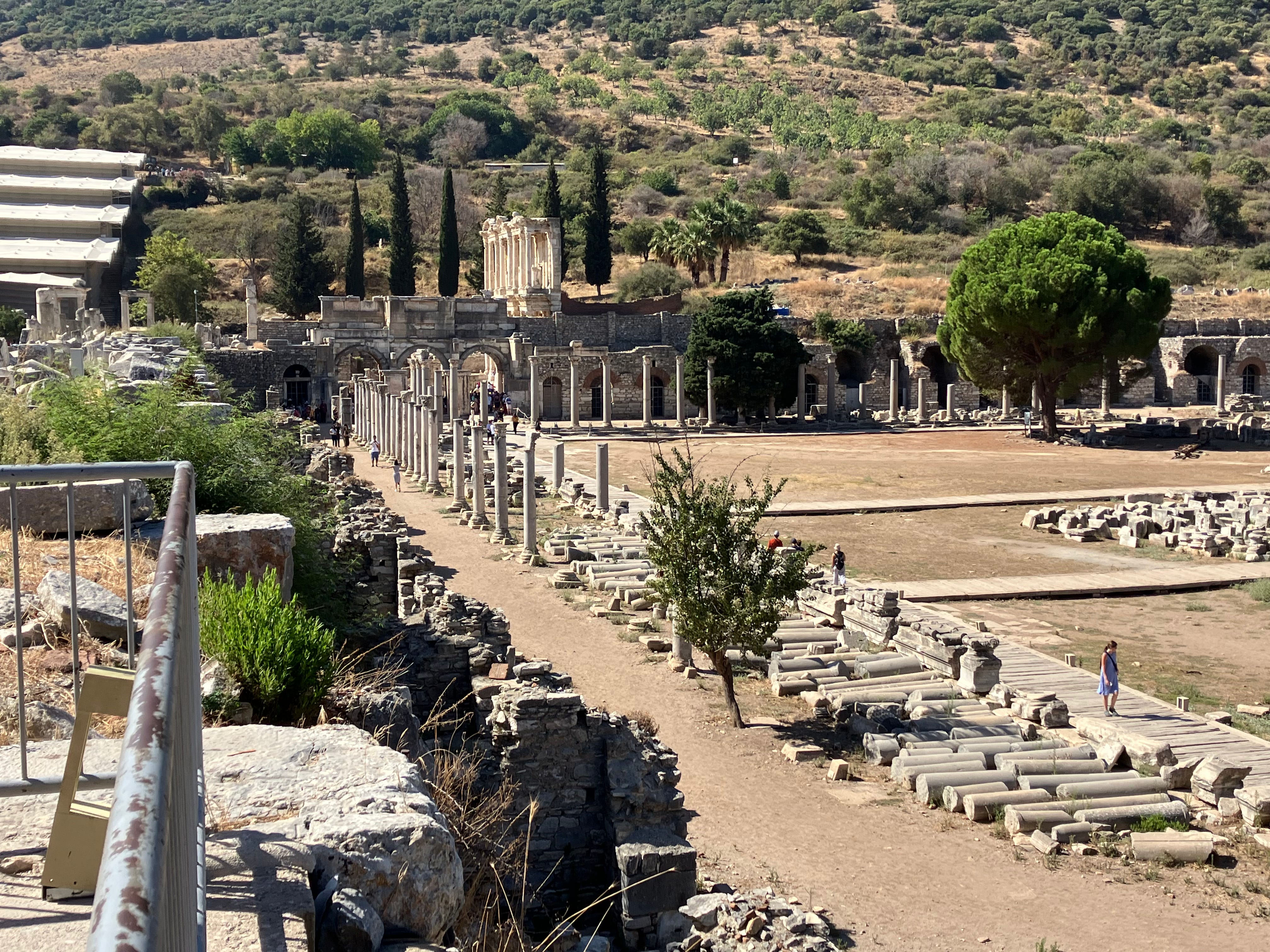
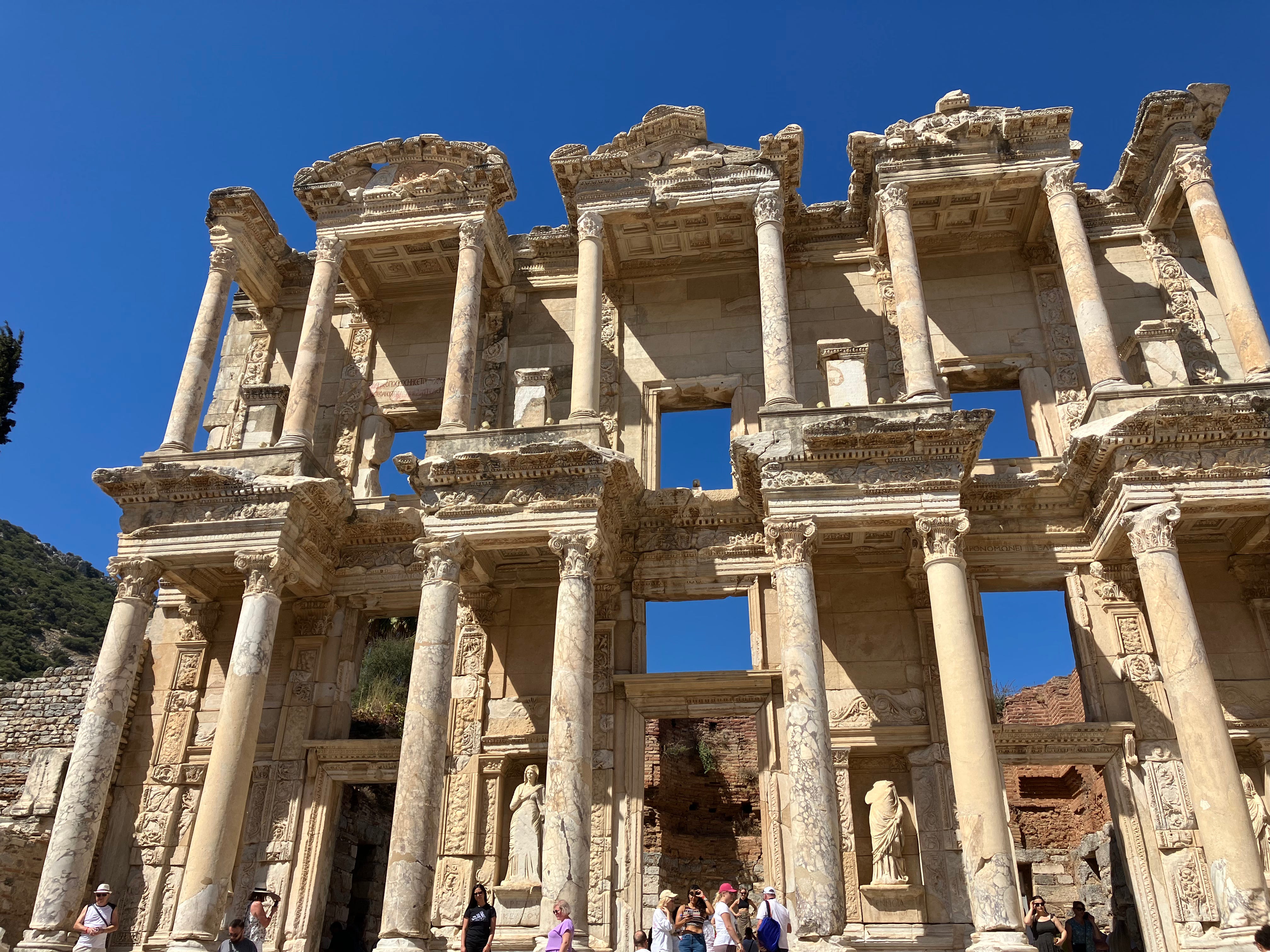
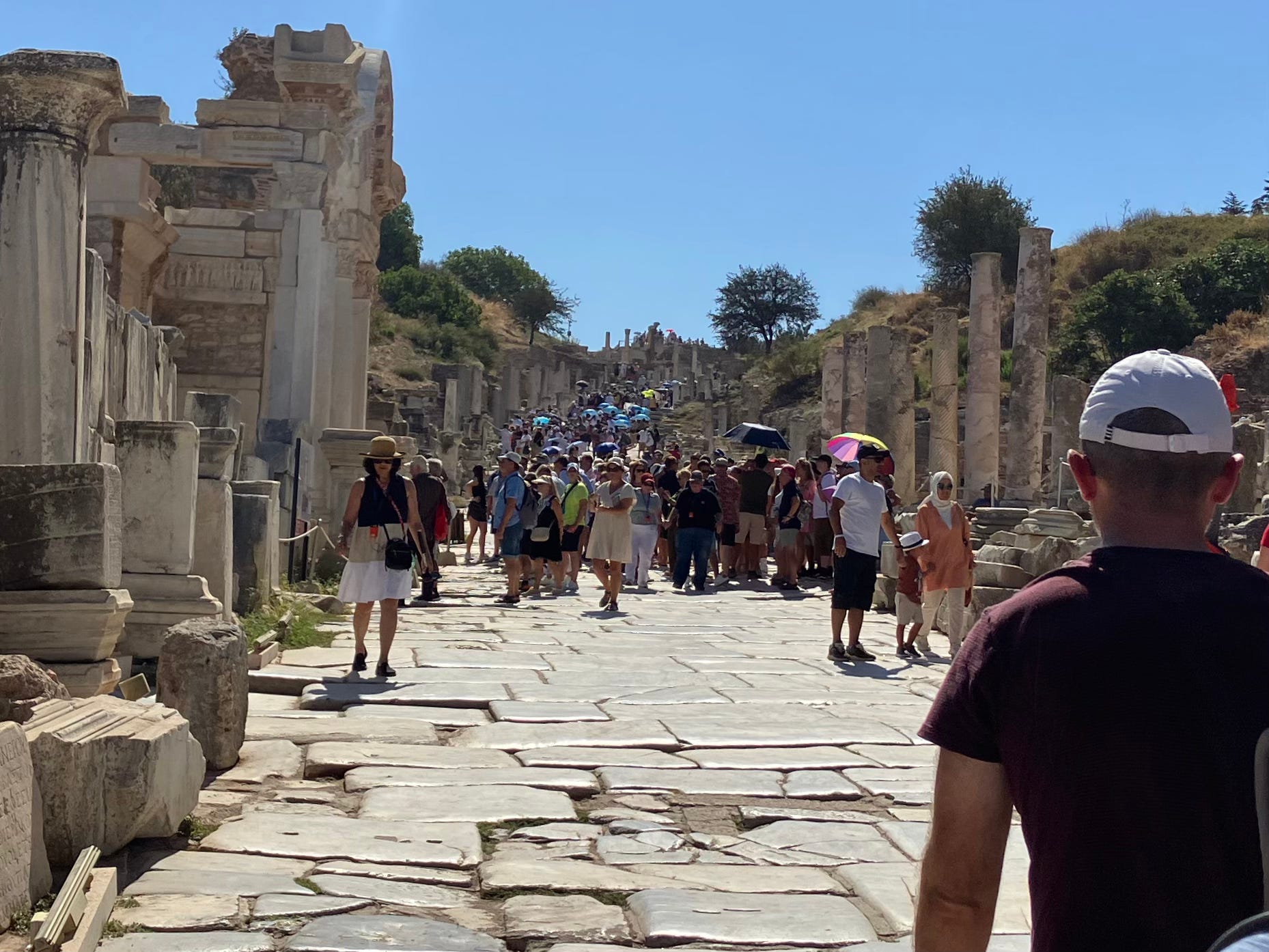
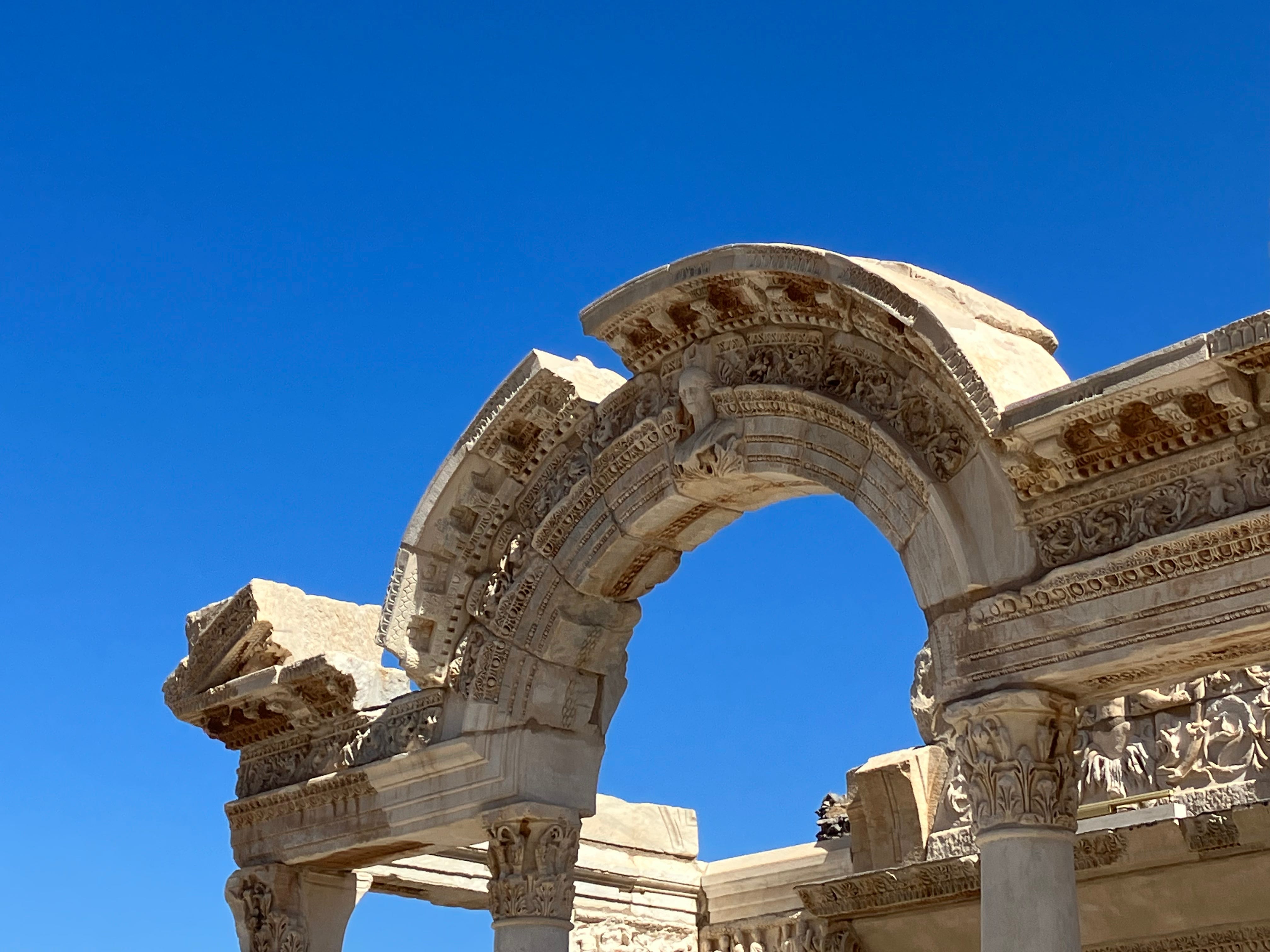
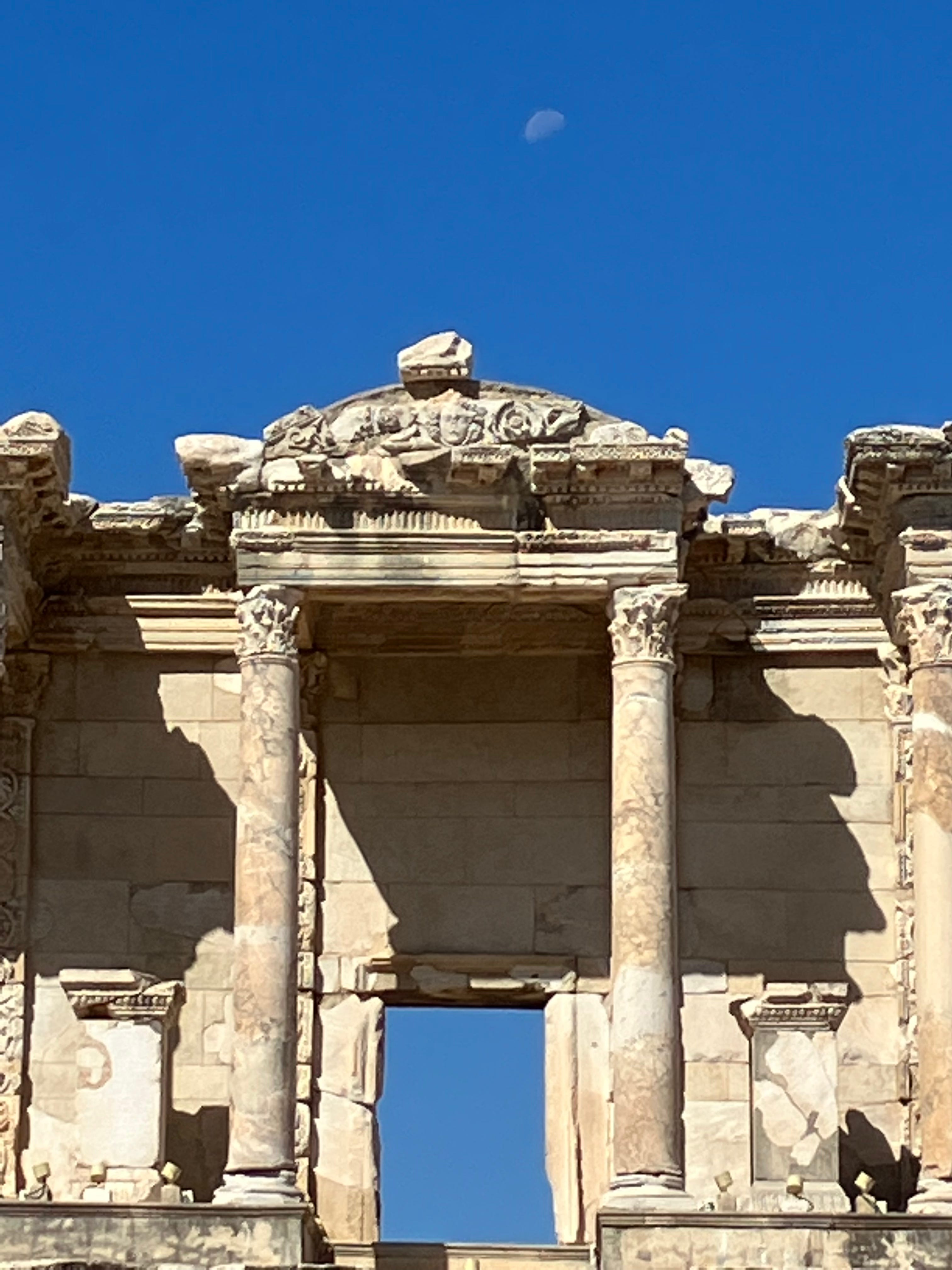
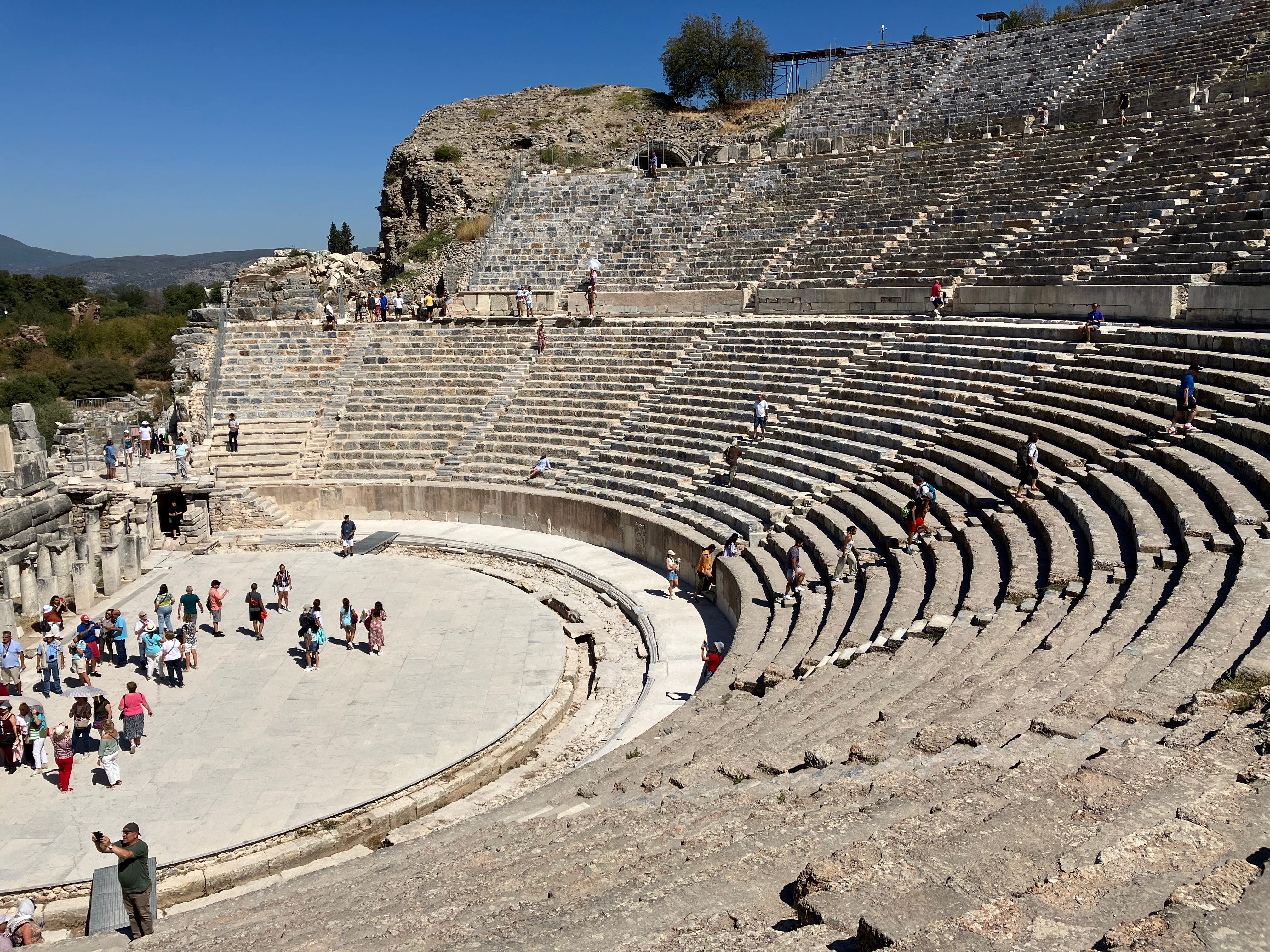
The library and other structures in Ephesus, Turkey. (My photos)
Guardians of knowledge
Later, during the medieval period in Europe, in years of violence and turmoil, monks and other members of the clergy became the custodians of the world’s knowledge. Libraries became secluded, guarded places. In the early Middle Ages (500-1000 CE), monasteries often were the only institutions with the resources to preserve and painstakingly copy ancient texts through hundreds of years of political instability.

Libraries survived. During the Renaissance they thrived, especially after the invention of the printing press around 1440 and the founding of universities all over the continent. Printing greatly reduced the cost of reproducing books, allowing for the circulation of much more reading material in multiple languages.
In the 1940s and 1950s, science fiction writer Isaac Asimov , inspired by the efforts of certain medieval encyclopedists and by Edward Gibbon’s book, The Decline and Fall of the Roman Empire, wrote his popular Foundation Trilogy of novels. In them, Asimov imagined a few learned custodians in a future galactic empire safeguarding the world’s knowledge for subsequent generations in the face of an inevitable decline and collapse that sets back civilization by thousands of years.
An oddity
This month, while examining the ruins of an ancient city south of Cairo, in Egypt, researchers discovered a mummy with a scripted papyrus fragment placed inside the chest cavity. It may have been used for the ritual of the burial rite, but the text was anything but ambiguous: it was readily identified as a passage from Homer’s epic poem, The Iliad.
The mummy is about 1,600 years old. The scrap of writing is the first Greco-Roman papyrus fragment found at such a burial site. The text names the Greek vessels that set sail for Troy. The catalogue of ships is exactly as it appears in Book II of The Iliad. Archeologists don’t know the reason why this text was placed in or on the mummy, but someone thought it was important enough to place there. What I find interesting is that Homer’s story of Achilles and the Trojan War was at least 800 years old, maybe more, when the mummified person was buried. Through all those previous centuries in antiquity, someone had preserved the story and copied the scrolls.
Digital era
In libraries today, the link between the past and present remains strong. While librarians are guardians of some traditions, increasingly they are focused on the opportunities offered by technology. Modern libraries now manage digital collections and electronic resources like e-books and audiobooks, videos and digital magazines. Some libraries also offer 3D printers and recording studios, providing public accessibility to expensive technology.
In a strange twist of fate, librarians find themselves tasked with preserving digital material. As scrolls once gave way to printed books, today’s librarians grapple with how to secure digital content that can become obsolete or inaccessible as formats change. In this sense, the role of libraries has remained the same as it was in medieval times, when monks preserved knowledge as empires crumbled. Now, libraries migrate digital files to keep content accessible.
Yet there is still something physical and innately human about libraries. People come together to access collections or to use meeting rooms. Books offer a sensory experience. Searching for material or randomly exploring shelves can be enjoyable. Unlike on a digital device, when we browse a book we feel the texture of the pages; fingers slide over glossy photographs. Sometimes we may even notice a faint odour in time-worn documents.
And finding something in a library that piques our curiosity always feels like a nice surprise.
“The only thing you absolutely have to know is the location of the library.”
Notes:
The Erin Village public library in Wellington County, Ontario.
The story of the library of Celsus from the World History Encyclopedia website.
Wikipedia’s page on the library of Celsus.
On Isaac Asimov’s Foundation Trilogy
News of the discovery of a classical text fragment in a mummy
Very interesting, and a great idea, Renato! Thank you! It helps me a lot with my English!
I immediately share this article with Chiara.
Renato, I enjoyed reading this post. Libraries hold such a wealth of information, yet I seldom give them a second thought. Your photos were spectacular. It is easy to envision what the original library in Ephesus once looked like. Well done!